Archive for Yeshua

ARMAGEDDON: THE NATIONS GATHER, BUT THE KING HAS OTHER PLANS! -Mark Wilson

Posted in Mark Wilson, Prophecy, Revelation with tags , , , , , , , , , , , , , , , , , , , , on November 1, 2026 by paulthepoke

Mark provides outstanding Biblical content on X @ https://x.com/Mark_Wilson_25/
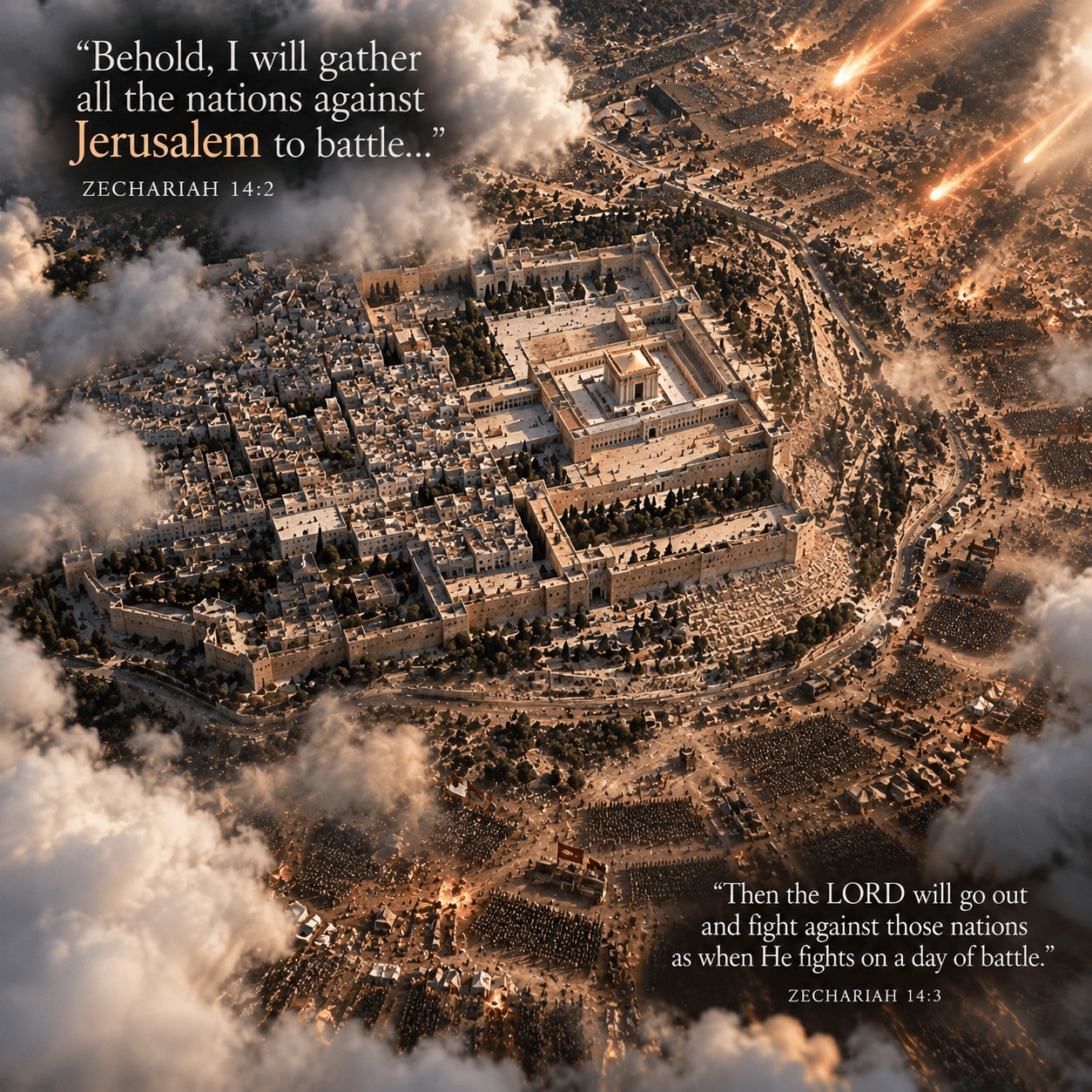
Aerial view of Jerusalem depicted as a city under siege, with texts from Zechariah 14:2 and 14:3 overlaying the image.

Armageddon

Few words evoke more images of worldwide catastrophe. Yet one of the most recognizable events in biblical prophecy is mentioned by name only ONCE in Scripture.

And its significance reaches deep into the Hebrew prophets.

1. ARMAGEDDON: WHERE DO THE ARMIES ACTUALLY GATHER?

“And they assembled them at the place that in Hebrew is called Armageddon.” (Revelation 16:16)

The Hebrew name Har-Magedon is traditionally associated with Megiddo in northern Israel, although its precise derivation remains debated.

Megiddo overlooks the Jezreel Valley, an ancient military crossroads where kings fought and kingdoms fell (Judges 5:19; 2 Kings 23:29).

But notice something frequently overlooked. Revelation identifies Armageddon as the gathering place, not necessarily the location of the decisive battle.

Meanwhile, Zechariah 12–14 repeatedly identifies Jerusalem as the focus of the nations’ hostility and God’s intervention.

Could Megiddo be the staging ground for a much larger military campaign culminating at Jerusalem? And why does John specifically emphasize the location’s Hebrew name?

Perhaps understanding Armageddon requires us to return to the Hebrew prophets.

2. WHO REALLY GATHERS THE NATIONS?

Revelation 16:14 describes demonic spirits gathering the kings of the world for battle.

Yet Joel 3:2 declares: “I will gather all the nations and bring them down to the Valley of Jehoshaphat. And I will enter into judgment with them there, on behalf of my people and my heritage Israel.”

And Zechariah 14:2 records the LORD saying: “For I will gather all the nations against Jerusalem to battle.”

Who is gathering them?

Satan gathers the nations in rebellion. God sovereignly gathers them for judgment.

The nations believe they are assembling for conquest. But they are approaching an appointment with the King.

This confrontation belongs to the broader Day of the LORD, anticipated throughout Joel, Zephaniah, Zechariah, and other Hebrew prophets.

Armageddon is not an isolated prediction buried in Revelation. It is connected to a prophetic narrative spanning centuries.

3. WHY DOES EVERYTHING CENTER ON ISRAEL AND JERUSALEM?

“On that day I will make Jerusalem a heavy stone for all the peoples.” (Zechariah 12:3)

“And on that day I will seek to destroy all the nations that come against Jerusalem.” (Zechariah 12:9)

Notice the geographical specificity. Israel. Judah. Jerusalem. The nations.

The prophets repeatedly identify the land and people at the center of this confrontation.

This raises a serious question for interpretations that understand these passages primarily symbolically: If God repeatedly identifies Jerusalem and Judah, what textual justification allows us to remove their geographical significance?

The Abrahamic Covenant includes an enduring land promise (Genesis 17:7–8).

The Davidic Covenant promises an enduring royal dynasty (2 Samuel 7:12–16).

God’s covenant purposes for Israel have not been canceled.

4. ISRAEL’S DELIVERANCE INVOLVES MORE THAN MILITARY VICTORY

Here is a remarkable detail often overlooked.

Zechariah 12:10 declares: “And I will pour out on the house of David and the inhabitants of Jerusalem a spirit of grace and pleas for mercy.”

The verse continues with the extraordinary prophecy concerning the One who was pierced and the mourning that follows.

The prophecy moves beyond national conflict to spiritual recognition and repentance.

Romans 11:26 adds: “And in this way all Israel will be saved.”

From a futurist understanding, Israel’s ultimate restoration involves both national deliverance and spiritual renewal through Yeshua HaMashiach.

The greatest miracle surrounding Jerusalem’s deliverance may not be the defeat of her enemies, but Israel’s recognition of her Messiah. The King who delivers Israel is also the One who redeems her.

5. THE MOUNTAIN THAT WITNESSED HIS DEPARTURE

“Then the LORD will go out and fight against those nations as when he fights on a day of battle.” (Zechariah 14:3)

“On that day his feet shall stand on the Mount of Olives that lies before Jerusalem on the east.” (Zechariah 14:4)

Acts 1:9–12 records Yeshua ascending from the Mount of Olives and the angels promising His return.

Acts doesn’t explicitly identify the location of His return, but the connection with Zechariah is remarkable.

The mountain that witnessed His departure may also witness His victorious return.

Revelation 19:19 describes the beast and the kings of the earth gathering to make war against the rider on the white horse.

The nations gather against the King of kings. But the outcome is never in doubt.

6. ARMAGEDDON IS NOT THE END OF HUMAN HISTORY

Revelation 19:19–21 describes Messiah’s victory over the beast and his armies.

But what happens next?

Revelation 20:1–3 describes Satan being bound for a thousand years.

“They came to life and reigned with Christ for a thousand years.” (Revelation 20:4)

Only AFTER the thousand years does Satan gather the nations for another rebellion (Revelation 20:7–10).

In the premillennial understanding, these are two distinct confrontations separated by a thousand years.

Amillennial interpreters commonly understand Revelation 20 as revisiting earlier events rather than continuing the chronology.

But the sequential reading raises an important question: If Armageddon immediately ends human history, why does Revelation describe a thousand-year reign followed by another rebellion?

Armageddon precedes the Messianic Kingdom.

The final rebellion follows it.

7. WHAT HAPPENS TO THE SURVIVING NATIONS?

Perhaps the most astonishing detail appears in Zechariah 14.

Verse 2 describes the nations gathering against Jerusalem for war.

Yet verse 16 declares: “Then everyone who survives of all the nations that have come against Jerusalem shall go up year after year to worship the King, the LORD of hosts, and to keep the Feast of Booths.”

Read that carefully.

SURVIVORS from the nations that attacked Jerusalem! The nations once approached Jerusalem in hostility. Now their survivors journey there to worship the King and celebrate Sukkot.

Zechariah 14:17–19 even describes consequences for nations refusing to participate.

The same chapter that begins with Jerusalem surrounded by enemies ends with the nations acknowledging the LORD’s kingship.

What an extraordinary reversal!

From WAR to WORSHIP.

From REBELLION to SUBMISSION.

From armies surrounding Jerusalem to nations worshiping the King.

And Zechariah 14:9 declares: “And the LORD will be king over all the earth.”

From a premillennial perspective, this describes life under Messiah’s earthly reign, before the final judgment and the eternal state.

8. THE KINGDOM GOD PROMISED HAS NOT BEEN CANCELED

The Hebrew prophets anticipated more than the defeat of Israel’s enemies.

They promised a restored Israel, a righteous Davidic King, and nations learning the ways of the LORD.

Isaiah 2:3 declares: “For out of Zion shall go forth the law, and the word of the LORD from Jerusalem.”

Micah 4:3 describes nations beating their swords into plowshares and learning war no more.

Armageddon does not erase God’s covenant promises. It brings the prophetic narrative toward their fulfillment.

CONSIDER THIS FINAL QUESTION:

If Armageddon marks the immediate end of human history, why does Zechariah describe survivors from the hostile nations traveling to Jerusalem year after year to worship the King?

The nations gather against Jerusalem.

The Messiah returns in victory.

Israel recognizes her Deliverer.

And the nations that once opposed His purposes must acknowledge His reign.

ARMAGEDDON IS NOT THE END OF GOD’S PLAN FOR THE EARTH. IT IS THE CLIMACTIC CONFRONTATION BEFORE THE PROMISED MESSIANIC KINGDOM.

“And the LORD will be king over all the earth.” (Zechariah 14:9)

Revelation 16:13–16; 19:11–21; 20:1–10 | Joel 3 | Zechariah 12–14 | Isaiah 2:2–4 | Micah 4:1–4 | Romans 11:25–27

Mark provides outstanding Biblical content on X @ https://x.com/Mark_Wilson_25/

ZECHARIAH: GOD REMEMBERS -Mark Wilson

Posted in #PaulthePoke, Mark Wilson with tags , , , , , , , , , , , , , , , , , on October 11, 2026 by paulthepoke

Mark provides outstanding Biblical content on X @ https://x.com/Mark_Wilson_25/
A figure dressed in biblical attire stands on a rocky ledge, overlooking a city with ancient architecture under a dramatic sky filled with rays of sunlight and clouds.

Zechariah is one of the most breathtaking books in all of Scripture.

Its name means “YHWH remembers,” and that truth runs through the entire book.

God remembers His covenant.
The LORD remembers Jerusalem.
The Holy One of Israel remembers His people.
The King remembers every promise He has spoken.

Zechariah begins with a returned remnant, a damaged city, and a Temple being rebuilt. But the prophecy quickly moves far beyond Zechariah’s own generation.

The horizon expands to Israel’s future, Messiah’s coming, Jerusalem’s central role, Israel’s repentance, the judgment of the nations, and the establishment of the Kingdom.

Zechariah is a prophetic mountain range.

GOD HAS NOT FORGOTTEN JERUSALEM

The LORD declares: “I am exceedingly jealous for Jerusalem and for Zion.” Zechariah 1:14

And again: “I have returned to Zion and will dwell in the midst of Jerusalem.” Zechariah 8:3

Then comes one of the most beautiful pictures of restoration: “Old men and old women shall again sit in the streets of Jerusalem… and the streets of the city shall be full of boys and girls playing.” Zechariah 8:4–5

Jeremiah gives the same assurance: “If this fixed order departs from before Me… then shall the offspring of Israel cease from being a nation before Me forever.” Jeremiah 31:35–36

And in that same chapter: “I will make a new covenant with the house of Israel and the house of Judah.” Jeremiah 31:31

Ezekiel adds: “I will take you from the nations and gather you from all the countries and bring you into your own land.” Ezekiel 36:24

Then comes spiritual renewal: “I will sprinkle clean water on you… and I will give you a new heart.” Ezekiel 36:25–26

Zechariah is not standing alone. He is part of a much larger prophetic chorus.

THE KING CAME HUMBLE

Zechariah foretold the arrival of Israel’s King: “Behold, your king is coming to you, righteous and having salvation is He, humble and mounted on a donkey.” Zechariah 9:9

Yeshua fulfilled that prophecy literally. But the next verse looks beyond His humble arrival: “His rule shall be from sea to sea, and from the River to the ends of the earth.” Zechariah 9:10

The same Messiah who came in humility will rule in glory. First the suffering. Then the crown.

THE SHEPHERD WOULD BE STRUCK

Zechariah also foretold Messiah’s rejection: “Strike the shepherd, and the sheep will be scattered.” Zechariah 13:7

Yeshua Himself applied this passage to what was about to happen to Him. But Zechariah never leaves the story at rejection. The Shepherd who was struck will return as King.

ISRAEL WILL LOOK UPON THE ONE THEY PIERCED

Zechariah 12 is one of the most remarkable passages in the Tanakh. The LORD says: “I will pour out on the house of David and the inhabitants of Jerusalem a spirit of grace and pleas for mercy.” Zechariah 12:10

Then comes the stunning line: “They will look on Me, on Him whom they have pierced, and they shall mourn for Him.”

Recognition. Repentance. Grace. Restoration.

And the next chapter follows with cleansing: “On that day there shall be a fountain opened for the house of David and the inhabitants of Jerusalem, to cleanse them from sin and uncleanness.” Zechariah 13:1

Yeshua later spoke of a future day when Jerusalem would welcome Him: “You will not see Me again, until you say, ‘Blessed is He who comes in the name of the Lord.’” Matthew 23:39

Paul says the same storyline continues in Romans 11: “A partial hardening has come upon Israel, until the fullness of the Gentiles has come in.” Romans 11:25

Then: “And in this way all Israel will be saved.” Romans 11:26

And why can we trust that promise? “For the gifts and the calling of God are irrevocable.” Romans 11:29

Israel’s story is not finished.

JERUSALEM WILL STAND AT THE CENTER OF WORLD EVENTS

Zechariah says: “I will make Jerusalem a heavy stone for all the peoples.” Zechariah 12:3

The nations gather against the city.

But Jerusalem is not only the center of conflict. It is also the center of the coming Kingdom.

Isaiah saw the same future: “It shall come to pass in the latter days that the mountain of the house of the LORD shall be established.” Isaiah 2:2

And: “For out of Zion shall go forth the law, and the word of the LORD from Jerusalem.” Isaiah 2:3

Jerusalem is not erased from the prophetic story. It becomes central to it.

THE GOD OF ISRAEL WILL INTERVENE

Zechariah describes a future moment when the nations gather against Jerusalem. Then: “The LORD will go out and fight against those nations as when He fights on a day of battle.” Zechariah 14:3

And then comes one of the most dramatic prophecies in Scripture: “On that day His feet shall stand on the Mount of Olives that lies before Jerusalem on the east.” Zechariah 14:4

The mountain splits. The geography is specific. Jerusalem. The Mount of Olives. A real city. A real mountain. A real intervention.

Revelation 19 describes Messiah’s triumphant return as heaven opens and the King comes in righteousness and judgment.

Then Revelation 20 follows with His thousand-year reign.

The sequence is powerful: The King returns. His enemies are judged. Israel is restored. The nations come under His rule. The Kingdom is established.

THE KING WILL REIGN OVER ALL THE EARTH

Zechariah reaches its climax here: “The LORD will be King over all the earth.” Zechariah 14:9

That is where history is heading. Not toward the failure of God’s promises. Not toward the abandonment of Israel. Not toward the disappearance of Jerusalem from the prophetic plan.

But toward the reign of the King.

Living waters will flow from Jerusalem. The nations will come to worship. The city will be holy.

And: “Everyone who survives of all the nations… shall go up year after year to worship the King.” Zechariah 14:16

That is the breathtaking message of Zechariah.

The God of Israel remembers. The Shepherd was struck. The King is coming. Jerusalem will see Him. Israel will be restored. The nations will worship.

And one day: “The LORD will be King over all the earth.” Zechariah 14:9

Every promise will stand.

~

Mark provides outstanding Biblical content on X @ https://x.com/Mark_Wilson_25/

Was Jonah’s Greatest Sign Really the Fish? -Mark Wilson

Posted in #PaulthePoke, Mark Wilson with tags , , , , , , , , , , , , , , on August 5, 2026 by paulthepoke

Mark provides outstanding Biblical content on X @ https://x.com/Mark_Wilson_25/

Most people remember Jonah as the prophet swallowed by a great fish.

But Yeshua saw something greater.

When the religious leaders demanded a sign, He pointed them back to Israel’s Scriptures:

“No sign will be given to it except the sign of the prophet Jonah.”
Matthew 12:39

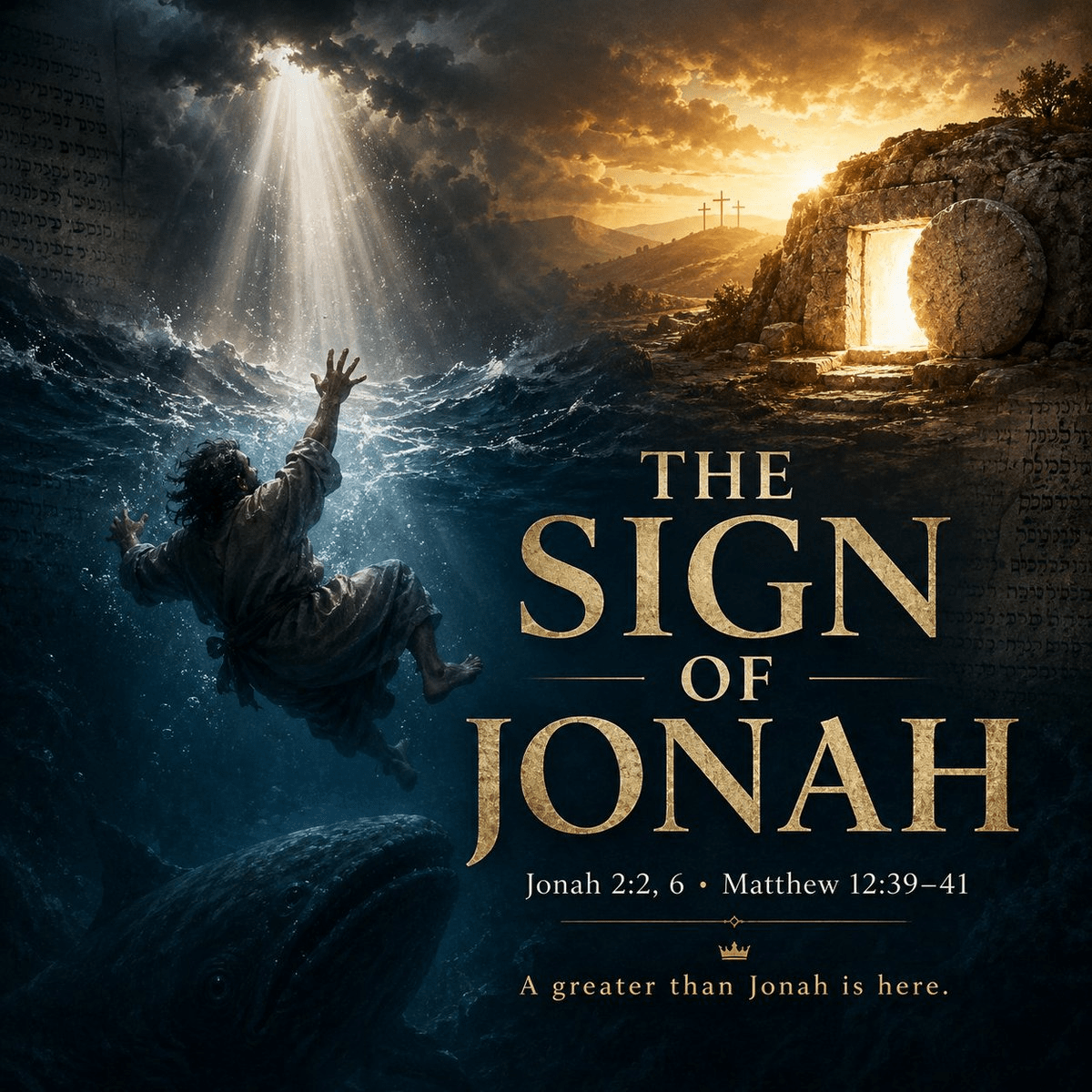
Jonah’s descent, return to life, and mission to the nations formed a divinely woven pattern of Messiah’s death, resurrection, and worldwide call to repentance.

~

❖ A Galilean prophet of Israel’s restoration

Before Nineveh, Jonah had already prophesied Israel’s restoration:

“According to the word of the LORD, the God of Israel, which He spoke through His servant Jonah.” 2 Kings 14:25

God had seen Israel’s affliction and had not forgotten His people (2 Kings 14:25–27).

Jonah was also from Gath-hepher in Galilee. That makes the later claim, “No prophet arises from Galilee,” deeply ironic (John 7:52). Jonah had arisen from Galilee, and now the greater Jonah stood among them.

~

❖ Jonah’s journey is a repeated descent

The Hebrew narrative emphasizes Jonah’s downward movement.

He goes down to Joppa, down into the ship, down into its innermost parts, and finally down into the sea.

From the depths he cries: “Out of the belly of Sheol I cried.” Jonah 2:2

“I went down to the foundations of the mountains.” Jonah 2:6

Jonah speaks in the language of death, Sheol, the pit, and burial.

Then God reverses the descent: “Yet You brought up my life from the pit, O LORD my God.” Jonah 2:6

The pattern is clear: descent, apparent death, divine deliverance, restored life.

Yeshua identified this as the sign of His own death and resurrection:

“Just as Jonah was three days and three nights in the belly of the great fish, so will the Son of Man be three days and three nights in the heart of the earth.” Matthew 12:40

Jonah descended because he fled from God’s will.

Yeshua descended because He obeyed it.

~

❖ One man is handed over and others are spared

Jonah tells the sailors: “Pick me up and throw me into the sea; then the sea will become calm for you.” Jonah 1:12

They plead, “Do not charge us with innocent blood” (Jonah 1:14).

When Jonah is handed over, the storm ceases and everyone aboard is spared. Jonah suffered because of his own disobedience, so the comparison is not perfect.

But Yeshua, the truly innocent One, willingly gave Himself for others: “No one takes it from Me, but I lay it down of My own accord.” John 10:18

Jonah’s surrender calmed a temporary storm.

Messiah’s sacrifice brings peace with God (Isaiah 53:5).

Jonah slept while sailors feared for their lives. Yeshua also slept during a storm and was awakened by terrified disciples (Mark 4:38).

But Jonah could not command the sea.

Yeshua rebuked it: “Peace! Be still!” Mark 4:39

Jonah was powerless before the waters.

The greater Jonah ruled them.

~

❖ The suffering prophet prayed Israel’s Scriptures

Jonah’s prayer echoes Psalms 18, 42, 69, 116, and 120, and concludes: “Salvation belongs to the LORD.” Jonah 2:9; Psalm 3:8

Yeshua likewise prayed Israel’s Psalms in His suffering (Psalm 22:1; Matthew 27:46; Psalm 31:5; Luke 23:46).

The suffering prophet prayed Israel’s songs.

The suffering Messiah fulfilled them.

~

❖ Life from death leads to Gentile repentance

After Jonah is brought up from the depths, the word of the LORD comes again: “Arise, go to Nineveh.” Jonah 3:2

The prophet who had descended into Sheol now rises and carries God’s message to the Gentiles.

Nineveh believes God, turns from violence, and receives mercy: “God saw their works, that they turned from their evil way.” Jonah 3:10

Following Messiah’s resurrection, repentance and forgiveness likewise go from Jerusalem to the nations: “Repentance for the forgiveness of sins should be proclaimed in His name to all nations, beginning from Jerusalem.” Luke 24:47

The pattern is striking: death, return to life, renewed commission, Gentile repentance.

Yet God had not abandoned Israel.

Jonah was an Israelite prophet, and the nations received mercy through Israel’s messenger.

“In you all the families of the earth shall be blessed.” Genesis 12:3

“I will also make You a light to the nations.” Isaiah 49:6

God’s mercy reaches the nations through Israel, not by erasing Israel.

~

❖ Jewish commentary sharpens Yeshua’s warning

Rashi explained that Jonah resisted Nineveh because he expected the Gentiles to repent quickly, exposing Israel’s failure to heed her prophets.

This highlighted Yeshua’s warning: “The men of Nineveh will rise up at the judgment with this generation and condemn it, for they repented at the preaching of Jonah, and behold, something greater than Jonah is here.” Matthew 12:41

Nineveh repented at the preaching of a reluctant prophet.

Israel’s leaders stood before the obedient Messiah.

Jonah performed no signs in Nineveh.

Yeshua healed the sick, opened blind eyes, taught Torah with authority, and proclaimed the Kingdom. Something greater than Jonah had come.

~

❖ Jonah knew mercy but struggled to reflect it

Jonah admits why he fled: “I knew that You are a gracious and compassionate God, slow to anger and abundant in mercy.” Jonah 4:2

He was echoing Exodus 34:6.

Jonah understood God’s mercy, but resented seeing it extended to Nineveh. Jonah sat outside the city hoping judgment would fall.

Yeshua approached Jerusalem knowing judgment was coming and wept over it (Luke 19:41–44).

Jonah was angry that sinners might live.

Yeshua gave His life so sinners could live.

Jonah descended unwillingly because of disobedience.

Yeshua descended willingly in perfect obedience.

Jonah emerged from the depths and preached repentance to one Gentile city.

Yeshua rose from the dead and sent repentance to every nation.

Jonah was a sign.

Yeshua was its fulfillment.

The sign had been embedded in Israel’s Scriptures all along.

Mark provides outstanding Biblical content on X @ https://x.com/Mark_Wilson_25/

Call Him Jesus

Posted in #PaulthePoke, Christmas with tags , , , , , , on December 23, 2024 by paulthepoke

Matthew 1:21 She will give birth to a Son, and you are to give Him the name Jesus, because He will save His people from their sins.”

We call Him Jesus in English.

Ἰησοῦς or Iésous is the Greek form of the Hebrew Yehoshua. The name means “Yahweh is salvation” or “Yahweh saves.”

Yehoshua is a combination of YHWH, which is the proper name of God and yasha` which is a Hebrew verb.

The term for LORD is Yahweh, The Existing One. This is the definitive name for God. This is the proper name of the Hebrew God of the Bible. Jehovah is a word that has been translated to English from the Hebrew, Yahweh. The correct spelling is YHWH.  Scholars refer to this as the Tetragrammaton, Greek for four letters.

This name is so sacred, Jews refuse to pronounce it. The first mention of the name is in Exodus between God and Moses.

Exodus 3:14  God said to Moses, “I AM WHO I AM”; and He said, “Thus you shall say to the sons of Israel, ‘I AM has sent me to you.’

Yasha` means to save, deliver from moral troubles; to give victory to. This is the verb form.

The noun form of yasha` is Yeshua. It means: He saves. The Hebrew name for Jesus is Yeshua.

Yeshua Himself connects the dots in the Book of John. Yeshua or “He saves” makes seven statements in the Book of John explaining “I am…”

I am the bread of life (John 6:35).

I am the light of the world (John 8:12).

I am the gate (John 10:9).

I am the good shepherd (John 10:11).

I am the resurrection and the life (John 11:25).

I am the way and the truth and the life (John 14:6).

I am the vine (John 15:5).

Yeshua is Yahweh, The Existing One. He saves. He will have military conquest.

John 8:58 Jesus said to them, “Truly, truly, I say to you, before Abraham was born, I AM.”

Jesus Christ is the victorious warrior. He will dwell or tabernacle with the nation we know as Israel. He too will shout for joy with the introduction of His Kingdom. Yeshua will celebrate. Good times are coming.

Here is a mental exercise for all. Every time you see “Jesus/Yeshua/Yehoshua/Ἰησοῦς” substitute the meaning of His name…

HE SAVES…

https://www.amazon.com/Paul-Lehr/e/B09W8FB77N

Jude: Mercy

Posted in Jude with tags , , , , , , , , on October 13, 2018 by paulthepoke

Jude 1:2 May mercy and peace and love be multiplied to you.

The Greek word for mercy is ἔλεος/eleos. It is defined as pity or compassion. Mercy is being excused from a deserved punishment or outcome. HELPS Word-studies states it is God’s loyalty to His covenant. The word is used 27 times in the New Testament.

Per Strong’s Concordance, mercy defined: kindness or good will towards the miserable and the afflicted, joined with a desire to help them;

of men towards men: to exercise the virtue of mercy, show one’s self merciful;

of God towards men: in general providence; the mercy and clemency of God in providing and offering to men salvation by Christ;

the mercy of Christ, whereby at His return to judgment He will bless true Christians with eternal life.

Eleos is defined as “compassion” in some cases. For example…

Matthew 9:13 Go and learn what this means: ‘I desire compassion/mercy, and not sacrifice.’ For I came not to call the righteous, but sinners.” -Jesus

These are the words of Jesus in Matthew. He is quoting Hosea 6:6. The issue is one’s mental attitude, focus, and heart towards God. The Lord wants our hearts, not acts of religion.

Hosea 6:6 For I desire steadfast love and not sacrifice, the knowledge of God rather than burnt offerings.


The first time “mercy” is used in the Bible is in Genesis 19:16. The context is Lot’s family and Sodom and Gomorrah. God’s action towards Lot and his daughters is “merciful”. Notice, Lot and his daughters were spared from the judgment of Sodom and Gomorrah. Lot’s wife was extended mercy and she ultimately rejected mercy. Judgment, she became a pillar of salt. It does not matter if one is extended mercy. What are you as an individual going to do with mercy that has been extended to you?

Genesis 19:16 But he lingered. So the men seized him and his wife and his two daughters by the hand, the LORD being merciful to him, and they brought him out and set him outside the city.

This is the Hebrew word chemlah. It means pity or compassion just as the Greek word ἔλεος/eleos. Chemlah comes from the Hebrew word chamal which means to spare. The word implies we are responsible. Justice demands judgment. If a transgression is noted, punishment is indicated. The wage of sin is death. But, God is merciful.

Chemlah is used one other time in the Old Testament prophet of Isaiah. God is a God of mercy, even in the Old Testament. In the verse below chemlah is translated as pity.

Isaiah 63:9 In all their affliction he was afflicted, and the angel of his presence saved them; in his love and in his pity he redeemed them; he lifted them up and carried them all the days of old.

At the time of Isaiah’s writing, the verse above had prophetic implications toward the future work of Jesus Christ. Hindsight being 20/20 in the 21st century, we know this is talking about Jesus.

Afflicted… Who took affliction on behalf of an afflicted people?

…the angel of his presence… literally means “messenger of faces”. This messenger “saved” or yasha in the Hebrew. Yasha means to deliver or save from moral trouble. This is the verb form of the root word. The noun form of the word is “Yeshua”. Jesus is the English translation of Yeshua. Jesus delivers His people. Yeshua yasha…

Mercy is available. There is time now. God is merciful…

Ephesians 2:4 But God, being rich in mercy, because of the great love with which He loved us…


Please…Please Listen to Mercy

Posted in Uncategorized with tags , , , , , , , , , , , on May 28, 2018 by paulthepoke

Please respond to mercy…

Ephesians 2:4 But God, being rich in mercy, because of the great love with which He loved us…

The Greek word for mercy is ἔλεος/eleos. It is defined as pity or compassion. Mercy is being excused from a deserved punishment or outcome. HELPS Word-studies states it is God’s loyalty to His covenant. The word is used 27 times in the New Testament.

Eleos is defined as “compassion” in some cases. For example…

Matthew 9:13 Go and learn what this means: ‘I desire compassion/mercy, and not sacrifice.’ For I came not to call the righteous, but sinners.” -Jesus

These are the words of Jesus in Matthew. He is quoting Hosea 6:6. The issue is one’s mental attitude, focus, and heart towards God. The Lord wants our hearts, not acts of religion.

Hosea 6:6 For I desire steadfast love and not sacrifice, the knowledge of God rather than burnt offerings.

The first time “mercy” is used in the Bible is in Genesis 19:16. The context is Lot’s family and Sodom and Gomorrah. God’s action towards Lot and his daughters is “merciful”. Notice, Lot and his daughters were spared from the judgment of Sodom and Gomorrah. Lot’s wife was extended mercy and she ultimately rejected mercy. Judgment, she became a pillar of salt. It does not matter if one is extended mercy. What are you as an individual going to do with mercy that has been extended to you?

Genesis 19:16 But he lingered. So the men seized him and his wife and his two daughters by the hand, the LORD being merciful to him, and they brought him out and set him outside the city.

This is the Hebrew word chemlah. It means pity or compassion just as the Greek word ἔλεος/eleos. Chemlah comes from the Hebrew word chamal which means to spare. The word implies we are responsible. Justice demands judgment. If a transgression is noted, punishment is indicated. The wage of sin is death. But, God is merciful.


Chemlah is used one other time in the Old Testament prophet of Isaiah. God is a God of mercy, even in the Old Testament. In the verse below chemlah is translated as pity.

Isaiah 63:9 In all their affliction he was afflicted, and the angel of his presence saved them; in his love and in his pity he redeemed them; he lifted them up and carried them all the days of old.

At the time of Isaiah’s writing, the verse above had prophetic implications toward the future work of Jesus Christ. Hindsight being 20/20 in the 21st century, we know this is talking about Jesus.

Afflicted… Who took affliction on behalf of an afflicted people?

…the angel of his presence… literally means “messenger of faces”. This messenger “saved” or yasha in the Hebrew. Yasha means to deliver or save from moral trouble. This is the verb form of the root word. The noun form of the word is “Yeshua”. Jesus is the English translation of Yeshua. Jesus delivers His people. Yeshua yasha…


God loves us and has compassion towards us. God will send us a “redeemer” or ga`al in the Hebrew. This is the same word that is used for the kinsman redeemer in the book of Ruth. The role of the ga`al is to avenge. He will seek revenge on behalf of the people. His blood has paid the ransom for sin. His people will be redeemed from bondage and slavery. Jesus is a kinsman from the tribe of Judah.

The redeemer lifts and bears the responsibility of all the short comings of His people. He is offering if anyone is willing to take the gift.


Please listen, judgment is coming to whole world.

Romans 3:19 Now we know that whatever the law says it speaks to those who are under the law, so that every mouth may be stopped, and the whole world may be held accountable to God.

John 12:31-32 “Now is the judgment of this world; now will the ruler of this world be cast out. And I, when I am lifted up from the earth, will draw all people to myself.” -Jesus

Mercy is available. There is time now. Jesus is merciful…

mercy

Isaiah 14:26-27 This is the purpose that is purposed concerning the whole earth, and this is the hand that is stretched out over all the nations. For the LORD of hosts has purposed, and who will annul it? His hand is stretched out, and who will turn it back? 

Please…


Trend Update: Fighting Escalates in Damascus/Israel Issues Stern Warning to Syria, March 2017

Posted in Burden of Damascus, Isaiah, Prophecy, Trend Update with tags , , , , , , , , on March 19, 2017 by paulthepoke

Isaiah 17:1 The oracle concerning Damascus. “Behold, Damascus is about to be removed from being a city and will become a fallen ruin.”

March 19, 2017: Military activity in Damascus has emerged over the weekend. Syrian rebels launched a surprise attack northeast of down town Damascus. They used tunnels to get into government territory to initiate the action. The attack was with car bombs and suicide missions.

The Syrian rebels consist of the Free Syrian Army, the Fateh al-Sham front, the jihadists formerly known as Jabhat al-Nusra, al-Qaeda in Syria. These groups are constantly changing names and alliances.

The fighting occurred in the Jobar neighborhood approximately 2 km from the Old City walls.

http://www.telegraph.co.uk/news/2017/03/19/syrian-rebels-launch-surprise-attack-damascus/

http://www.nzherald.co.nz/world/news/article.cfm?c_id=2&objectid=11821565

A new round of military exchanges has occurred between Israel and Syria. This is the second exchange in the last three days.

Yasser Hussein Asayeed a supporter of the Syrian army was reportedly killed. He was a member of a militia group based out of the Golan Heights region in Syria.

Israel has made it clear they mean business. Israeli Defense Minister Avigdor Lieberman issued the following statement.

“The next time that the Syrian air defenses fire at us, we will destroy them completely without thinking twice.’’ – Israeli Defense Minister Avigdor Lieberman

http://www.latimes.com/world/middleeast/la-fg-israel-syria-20170319-story.html

Activity in and around Damascus, Syria has intensified over the weekend. It appears to be escalating. Are we watching the Burden of Damascus unfold? Prophecy indicates Damascus will become a ruinous heap and destroyed. In the context of the same Isaiah 17 passage is a verse focusing on the Holy One of Israel. He will be seen on Earth. I believe the Holy One of Israel to be Jesus Christ or Yeshua, His Jewish name.

These do not appear to be times to play spiritual roulette with your soul. Encouraging all to get your heart, mind, and soul square with the Holy One.

Isaiah 17:7 In that day man will have regard for his Maker and his eyes will look to the Holy One of Israel.


Millennial Kingdom: Yasha` Yeshua

Posted in Gospel, Millennial Kingdom, Prophecy with tags , , , , , , , , , on May 22, 2016 by paulthepoke

Zephaniah 3:17 The LORD your God is in your midst, A victorious warrior. He will exult over you with joy, He will be quiet in His love, He will rejoice over you with shouts of joy.

The term “victorious warrior” is most interesting in the original language. The Hebrew word for “victorious” is yasha`. It is a verb. The grammar says the warrior is the cause. It means to save, deliver from moral troubles; to give victory to.

The Hebrew word for “warrior” is gibbowr, a strong and mighty man. –Strong’s Concordance

The strong and mighty warrior will be a savior. He will and has delivered from moral trouble or sin. He will give military victory to Israel.

The noun form of yasha` is Yeshua. The Hebrew name for Jesus is Yeshua.

The term for LORD is Yahweh, The Existing One. This is the definitive name for God. This is the proper name of the Hebrew God of the Bible. Jehovah is a word that has been translated to English from the Hebrew, Yahweh. The correct spelling is YHWH (Hebrew font is not available).  Scholars refer to this as the Tetragrammaton, Greek for four letters. This name is so sacred, Jews refuse to pronounce it. The name is first introduced in Exodus 3:14 when Moses and God are having a discussion. God said to Moses, “I AM WHO I AM”; and He said, “Thus you shall say to the sons of Israel, ‘I AM has sent me to you.’”

The LORD, Yahweh is speaking in this verse in Zephaniah 3.

Yeshua Himself connects the dots in the Book of John. Jesus makes seven statements in the Book of John explaining “I am…”

I am the bread of life (John 6:35).

I am the light of the world (John 8:12).

I am the gate (John 10:9).

I am the good shepherd (John 10:11).

I am the resurrection and the life (John 11:25).

I am the way and the truth and the life (John 14:6).

I am the vine (John 15:5).

Yeshua is Yahweh, The Existing One. He saves. He will have military conquest.

John 8:58 Jesus said to them, “Truly, truly, I say to you, before Abraham was born, I AM.”

Jesus Christ is the victorious warrior. He will dwell or tabernacle with the nation we know as Israel. The verse uses four different terms in Hebrew to describe the excitement and joy of Christ. He too will shout for joy with the introduction of His Kingdom. Yeshua will celebrate.

Good times are coming.