Archive for the Mark Wilson Category

The Imminent Rapture Should Change How We Live – Mark Wilson

Posted in #PaulthePoke, Mark Wilson, Rapture with tags , , , , , , , , , , , , , , , on September 9, 2026 by paulthepoke

Mark provides outstanding Biblical content on X @ https://x.com/Mark_Wilson_25/

A dramatic cityscape under a cloudy sky, with beams of light shining down on a crowd of people on a reflective surface. The text overlay includes religious references about the imminent rapture and instructions to be ready.

Prophecy was never given merely to satisfy our curiosity about what happens next.

It was given to make us ready.

Jesus promised: “I will also keep you from the hour of trial that is going to come on the whole world…” Revelation 3:10

And Paul described the glorious gathering:

“We who are still alive…will be caught up together with them in the clouds to meet the Lord in the air.” 1 Thessalonians 4:17

If the Rapture is truly imminent, the Church should live with expectancy.
But expectancy without accountability is incomplete.

Because after the gathering comes the Bema Seat.

“For we must all appear before the judgment seat of Christ…” 2 Corinthians 5:10

This is not judgment for salvation. Christ already bore our condemnation.

But grace does not erase accountability.
Our works will be examined.

Our motives will be exposed.

Our stewardship will matter.

Scripture does not give us a transcript of the questions Jesus will ask, but it tells us clearly what will matter.

~

💡 HOW WERE YOU LIGHT IN THE DARKNESS?

“You are the light of the world.” Matthew 5:14

Did your life point people toward Christ? Did you shine when darkness increased? Or did you hide the lamp because shining became uncomfortable?

~

🧂 HOW WERE YOU SALT IN A DECAYING CULTURE?

“You are the salt of the earth.” Matthew 5:13

When truth became unpopular, did you preserve it, speak it, and live it? Or did you slowly become indistinguishable from the world?

~

📣 WHAT DID YOU DO WITH THE GOSPEL?

“Go into all the world and preach the gospel…” Mark 16:15

Who heard about Jesus because you were here? Who did you pray for? Who did you tell? Who might be in eternity because you refused to remain silent?

~

📖 WHAT DID YOU DO WITH THE TRUTH I GAVE YOU?

“Correctly handles the word of truth.” 2 Timothy 2:15

Did you contend for truth when compromise was easier? Did you handle Scripture faithfully? Or reshape it to fit the culture?

~

⏳ WHAT DID YOU DO WITH THE TIME I GAVE YOU?

“Making the most of every opportunity…” Ephesians 5:16

Your days were numbered. Your conversations were numbered. Your opportunities were numbered. Did you redeem them?

~

❤️ WHY DID YOU SERVE ME?

The Lord: “will bring to light what is hidden in darkness and will expose the motives of the heart.” 1 Corinthians 4:5

Did you serve Christ for His glory? Or for recognition, applause, influence, and reputation? Was it really about Him?

~

🔥 WHAT DID YOU BUILD THAT WILL SURVIVE?

Paul says every believer’s work will be tested. Gold. Silver. Precious stones. Wood. Hay. Straw.

“The fire will test the quality of each person’s work.” 1 Corinthians 3:13

Some things that look enormous on earth may disappear at the Bema. Some quiet acts of obedience nobody noticed may shine forever.

~

🛡️ WHEN FOLLOWING ME COST YOU SOMETHING, WERE YOU FAITHFUL?

“Blessed is the one who perseveres under trial…” James 1:12

Did you stand when standing became costly? Did you love Christ more than comfort?

~

🌿 WHAT DID YOU DO WITH ISRAEL?

Paul says salvation came to the Gentiles: “to make Israel envious.” Romans 11:11

So ask it plainly: Did my life provoke the Jewish people to jealousy for their own Messiah? Did I show them love? Did I pray for their salvation? Did I honor the people through whom came the covenants, the Scriptures, the patriarchs, and Messiah according to the flesh?

Or did I boast against the branches?

“Do not consider yourself to be superior to those other branches.” Romans 11:18

Gentile believers were called to gratitude, humility, mercy, prayer, and Gospel witness.

Did Israel see something in us that made them long for their Messiah?

~

👀 DID KNOWING PROPHECY ACTUALLY CHANGE YOU?

Did prophecy make us more holy? More urgent? More compassionate? More evangelistic? More focused on eternity? Or merely more informed?

“All who have this hope in him purify themselves…” 1 John 3:3

If prophetic knowledge never changes how we live, something is wrong.

~

👑 DID YOU OCCUPY UNTIL I CAME?

Jesus said: “Put this money to work… until I come back.” Luke 19:13

Then the nobleman returned and called his servants to account for what they had done with what he entrusted to them. That is the force of the Parable of the Minas.

The issue was not merely: “Did you know I was coming back?”

It was: “What did you do while I was gone?”

And for us: “What did you do because you believed I was coming?”

Not speculate until I come. Not retreat until I come. Occupy. Serve. Witness. Pray. Stand. Love. Work. Watch.

Because the Jesus who promised: “I will come back and take you to be with me…” John 14:3

also said: “Look, I am coming soon! My reward is with me…” Revelation 22:12

~

IMMINENCE → EXPECTANCY → HOLINESS → SERVICE → ACCOUNTABILITY → REWARD

One day the trumpet will sound. The dead in Christ will rise. We who remain will be caught up together with them in the clouds. And so we will be with the Lord forever. 1 Thessalonians 4:16–17

Then every earthly opportunity will be over. No more darkness in which to shine. No more culture in which to be salt. No more person to evangelize. No more Jewish friend to love and provoke to jealousy for Messiah. No more assignment to finish.

And the question will no longer be: “When was the Rapture going to happen?”

It will be: “What did you do while you were waiting for Me?”

“Each of us will give an account of ourselves to God.” Romans 14:12

And even the crowns we receive will ultimately return to Him.

The elders cast their crowns before the throne: “You are worthy, our Lord and God…” Revelation 4:10–11

That is the destination. Not merely receiving a crown. Having something to lay at His feet.

Prophecy should not produce spectators. It should produce servants.

The imminent Rapture is not permission to abandon the world. It is a reason to spend ourselves for Christ while there is still time.

He is coming.

Be watching.

Be working.

Be witnessing.

Be faithful.

Be ready.

Mark provides outstanding Biblical content on X @ https://x.com/Mark_Wilson_25/

Zechariah Begins With Ruins & Ends With A King -Mark Wilson

Posted in #PaulthePoke, Mark Wilson, Prophecy with tags , , , , , , on August 20, 2026 by paulthepoke

Mark provides outstanding Biblical content on X @ https://x.com/Mark_Wilson_25/

If you want to know where the story of Jerusalem is going, read Zechariah.

The book begins with a battered people returning from exile.

Jerusalem is wounded.

The Temple is being rebuilt.

The nation looks small.

But the prophet begins to see things far greater than anything happening in his own generation.

YHVH declares:

“Sing and rejoice, O daughter of Zion: for, lo, I come, and I will dwell in the midst of thee.” Zechariah 2:10

And then:

“YHVH shall inherit Judah his portion in the holy land, and shall choose Jerusalem again.” Zechariah 2:12

That is where Zechariah is going.

He sees the Branch.

He sees the King.

He sees the Shepherd.

He sees the Pierced One.

And finally, he sees YHVH reigning over all the earth.

Zechariah starts among ruins.

It ends with glory.

~

First comes the Branch.

“Behold, I will bring forth My servant the Branch.” Zechariah 3:8

Then Zechariah reveals something extraordinary: “He shall bear the glory, and shall sit and rule upon His throne; and He shall be a priest upon His throne.” Zechariah 6:13

A ruler.

A priest.

One throne.

One mysterious figure bearing glory.

Who is He?

Zechariah is not finished.

~

Then the King appears.

“Behold, thy King cometh unto thee… lowly, and riding upon an ass.” Zechariah 9:9

The King comes humbly.

But the very next verse looks beyond His humility: “His dominion shall be from sea even to sea, and from the river even to the ends of the earth.” Zechariah 9:10

The One who arrives gently will ultimately rule universally.

But Zechariah is not finished.

~

The Shepherd is rejected.

And the price placed upon Him? Thirty pieces of silver. “So they weighed for my price thirty pieces of silver.” Zechariah 11:12

Then comes an astonishing statement from YHVH: “Cast it unto the potter: a goodly price that I was prized at of them.” Zechariah 11:13

Read that carefully.

The Shepherd is rejected.

Yet YHVH speaks of the price as the value placed upon Himself.

Why?

Zechariah is not finished.

~

Now Jerusalem becomes the center of an international crisis.

“I will make Jerusalem a burdensome stone for all people.” Zechariah 12:3

The nations gather.

YHVH intervenes.

“I will seek to destroy all the nations that come against Jerusalem.” Zechariah 12:9

Then suddenly: “They shall look upon Me whom they have pierced, and they shall mourn for Him, as one mourneth for his only son.” Zechariah 12:10

Stop there.

Who is speaking? YHVH.

Who was pierced? The text says: Me.

Yet the people mourn for: Him.

And not casually. They mourn as for an only son.

Who is this Pierced One whose rejection is somehow described as the piercing of YHVH?

What happens when Israel finally recognizes Him? Cleansing.

“In that day there shall be a fountain opened to the house of David and to the inhabitants of Jerusalem for sin and for uncleanness.” Zechariah 13:1

Mourning becomes cleansing.

Rejection becomes restoration.

But Zechariah is still not finished.

~

Then comes chapter 14.

Jerusalem is surrounded. The nations have gathered. Humanly speaking, the situation is impossible.

Then: “YHVH shall go forth, and fight against those nations.” Zechariah 14:3

And suddenly the prophecy becomes breathtakingly physical: “His feet shall stand in that day upon the Mount of Olives, which is before Jerusalem on the east.” Zechariah 14:4

His feet.

The Mount of Olives.

Jerusalem.

The mountain splits.

Living waters flow from Jerusalem.

And then comes the climax: “YHVH shall be King over all the earth.” Zechariah 14:9

But even that is not the end.

Zechariah had already declared: “I am returned unto Zion, and will dwell in the midst of Jerusalem.” Zechariah 8:3

And ultimately: “Many people and strong nations shall come to seek YHVH of hosts in Jerusalem.” Zechariah 8:22

The nations do not replace Jerusalem.

They come to Jerusalem.

~

Now look at the progression.

In chapter 9: The King rides on a donkey.

In chapter 11: The Shepherd is valued at thirty pieces of silver.

In chapter 12: The Pierced One is recognized.

In chapter 13: Israel is cleansed.

In chapter 14: His feet stand on the Mount of Olives.

And then: YHVH reigns over all the earth.

First humility. Then glory.

First rejection. Then recognition.

First piercing. Then cleansing.

First Jerusalem surrounded. Then Jerusalem exalted.

First the Shepherd is rejected. Then the King is worshiped.

~

So Zechariah leaves us with questions that refuse to disappear. Who is the Branch?

Who is the King?

Who is the rejected Shepherd?

Who is the One YHVH calls “Me” who was pierced?

Whose feet stand upon the Mount of Olives?

And who ultimately reigns as King over all the earth?

Zechariah does not merely predict events.

Zechariah unveils the coming King.

~

Mark provides outstanding Biblical content on X @ https://x.com/Mark_Wilson_25/

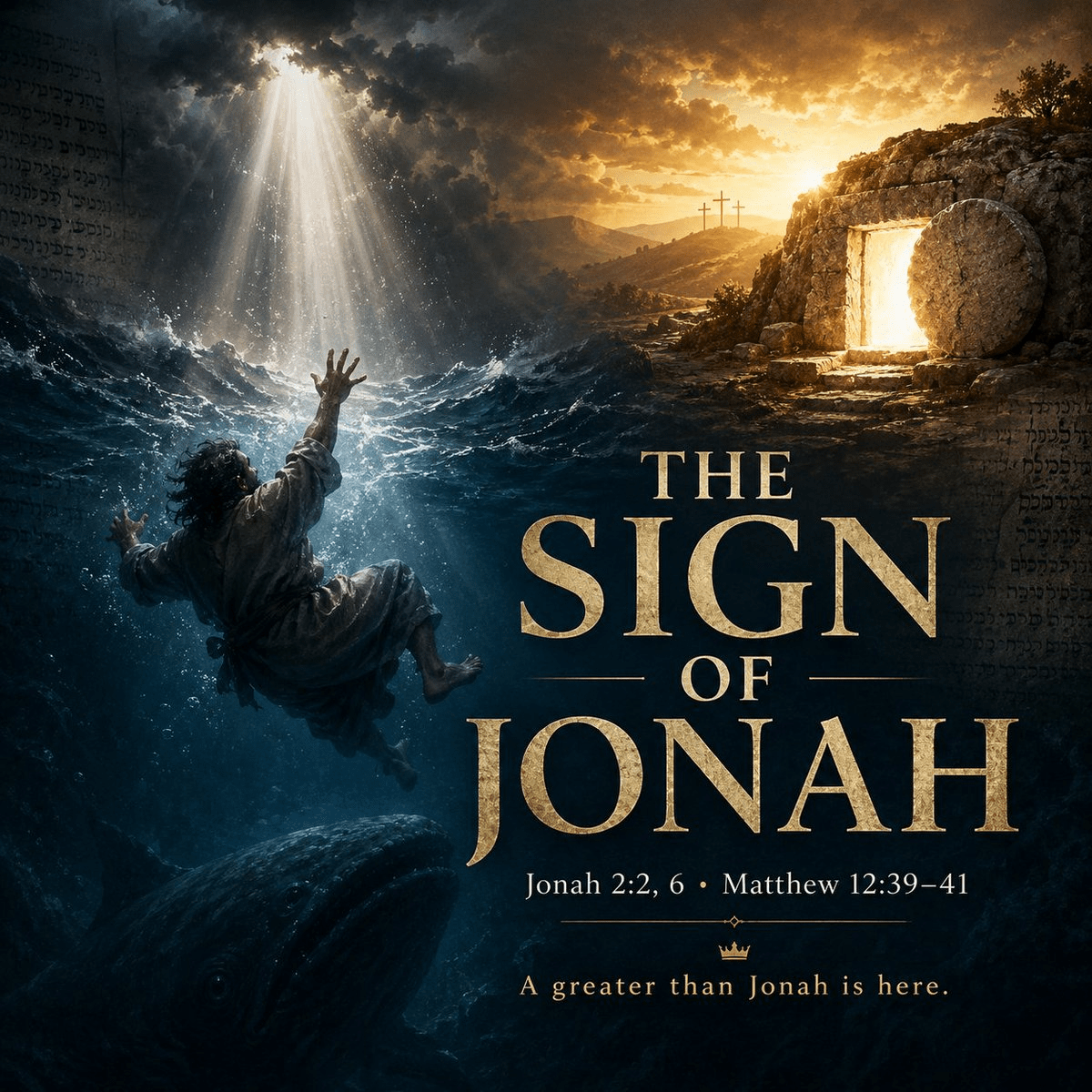
Was Jonah’s Greatest Sign Really the Fish? -Mark Wilson

Posted in #PaulthePoke, Mark Wilson with tags , , , , , , , , , , , , , , on August 5, 2026 by paulthepoke

Mark provides outstanding Biblical content on X @ https://x.com/Mark_Wilson_25/

Most people remember Jonah as the prophet swallowed by a great fish.

But Yeshua saw something greater.

When the religious leaders demanded a sign, He pointed them back to Israel’s Scriptures:

“No sign will be given to it except the sign of the prophet Jonah.”
Matthew 12:39

Jonah’s descent, return to life, and mission to the nations formed a divinely woven pattern of Messiah’s death, resurrection, and worldwide call to repentance.

~

❖ A Galilean prophet of Israel’s restoration

Before Nineveh, Jonah had already prophesied Israel’s restoration:

“According to the word of the LORD, the God of Israel, which He spoke through His servant Jonah.” 2 Kings 14:25

God had seen Israel’s affliction and had not forgotten His people (2 Kings 14:25–27).

Jonah was also from Gath-hepher in Galilee. That makes the later claim, “No prophet arises from Galilee,” deeply ironic (John 7:52). Jonah had arisen from Galilee, and now the greater Jonah stood among them.

~

❖ Jonah’s journey is a repeated descent

The Hebrew narrative emphasizes Jonah’s downward movement.

He goes down to Joppa, down into the ship, down into its innermost parts, and finally down into the sea.

From the depths he cries: “Out of the belly of Sheol I cried.” Jonah 2:2

“I went down to the foundations of the mountains.” Jonah 2:6

Jonah speaks in the language of death, Sheol, the pit, and burial.

Then God reverses the descent: “Yet You brought up my life from the pit, O LORD my God.” Jonah 2:6

The pattern is clear: descent, apparent death, divine deliverance, restored life.

Yeshua identified this as the sign of His own death and resurrection:

“Just as Jonah was three days and three nights in the belly of the great fish, so will the Son of Man be three days and three nights in the heart of the earth.” Matthew 12:40

Jonah descended because he fled from God’s will.

Yeshua descended because He obeyed it.

~

❖ One man is handed over and others are spared

Jonah tells the sailors: “Pick me up and throw me into the sea; then the sea will become calm for you.” Jonah 1:12

They plead, “Do not charge us with innocent blood” (Jonah 1:14).

When Jonah is handed over, the storm ceases and everyone aboard is spared. Jonah suffered because of his own disobedience, so the comparison is not perfect.

But Yeshua, the truly innocent One, willingly gave Himself for others: “No one takes it from Me, but I lay it down of My own accord.” John 10:18

Jonah’s surrender calmed a temporary storm.

Messiah’s sacrifice brings peace with God (Isaiah 53:5).

Jonah slept while sailors feared for their lives. Yeshua also slept during a storm and was awakened by terrified disciples (Mark 4:38).

But Jonah could not command the sea.

Yeshua rebuked it: “Peace! Be still!” Mark 4:39

Jonah was powerless before the waters.

The greater Jonah ruled them.

~

❖ The suffering prophet prayed Israel’s Scriptures

Jonah’s prayer echoes Psalms 18, 42, 69, 116, and 120, and concludes: “Salvation belongs to the LORD.” Jonah 2:9; Psalm 3:8

Yeshua likewise prayed Israel’s Psalms in His suffering (Psalm 22:1; Matthew 27:46; Psalm 31:5; Luke 23:46).

The suffering prophet prayed Israel’s songs.

The suffering Messiah fulfilled them.

~

❖ Life from death leads to Gentile repentance

After Jonah is brought up from the depths, the word of the LORD comes again: “Arise, go to Nineveh.” Jonah 3:2

The prophet who had descended into Sheol now rises and carries God’s message to the Gentiles.

Nineveh believes God, turns from violence, and receives mercy: “God saw their works, that they turned from their evil way.” Jonah 3:10

Following Messiah’s resurrection, repentance and forgiveness likewise go from Jerusalem to the nations: “Repentance for the forgiveness of sins should be proclaimed in His name to all nations, beginning from Jerusalem.” Luke 24:47

The pattern is striking: death, return to life, renewed commission, Gentile repentance.

Yet God had not abandoned Israel.

Jonah was an Israelite prophet, and the nations received mercy through Israel’s messenger.

“In you all the families of the earth shall be blessed.” Genesis 12:3

“I will also make You a light to the nations.” Isaiah 49:6

God’s mercy reaches the nations through Israel, not by erasing Israel.

~

❖ Jewish commentary sharpens Yeshua’s warning

Rashi explained that Jonah resisted Nineveh because he expected the Gentiles to repent quickly, exposing Israel’s failure to heed her prophets.

This highlighted Yeshua’s warning: “The men of Nineveh will rise up at the judgment with this generation and condemn it, for they repented at the preaching of Jonah, and behold, something greater than Jonah is here.” Matthew 12:41

Nineveh repented at the preaching of a reluctant prophet.

Israel’s leaders stood before the obedient Messiah.

Jonah performed no signs in Nineveh.

Yeshua healed the sick, opened blind eyes, taught Torah with authority, and proclaimed the Kingdom. Something greater than Jonah had come.

~

❖ Jonah knew mercy but struggled to reflect it

Jonah admits why he fled: “I knew that You are a gracious and compassionate God, slow to anger and abundant in mercy.” Jonah 4:2

He was echoing Exodus 34:6.

Jonah understood God’s mercy, but resented seeing it extended to Nineveh. Jonah sat outside the city hoping judgment would fall.

Yeshua approached Jerusalem knowing judgment was coming and wept over it (Luke 19:41–44).

Jonah was angry that sinners might live.

Yeshua gave His life so sinners could live.

Jonah descended unwillingly because of disobedience.

Yeshua descended willingly in perfect obedience.

Jonah emerged from the depths and preached repentance to one Gentile city.

Yeshua rose from the dead and sent repentance to every nation.

Jonah was a sign.

Yeshua was its fulfillment.

The sign had been embedded in Israel’s Scriptures all along.

Mark provides outstanding Biblical content on X @ https://x.com/Mark_Wilson_25/

What If Light Is One of the Bible’s Greatest Themes? -Mark Wilson

Posted in #PaulthePoke, Mark Wilson with tags , , , , , , , , , on July 29, 2026 by paulthepoke

Mark provides outstanding Biblical content on X @ https://x.com/Mark_Wilson_25/

The Bible begins in darkness.

Not with sin.

Not with death.

Not with rebellion.

Darkness.

“Now the earth was formless and empty, darkness was over the surface of the deep.” (Genesis 1:2)

Then came the first recorded words of God:

“Let there be light.” (Genesis 1:3)

Those are more than the opening words of creation.

They introduce one of Scripture’s greatest themes.

From Genesis to Revelation, God is steadily driving back the darkness.

As C. S. Lewis beautifully observed,

“I believe in Christianity as I believe that the sun has risen: not only because I see it, but because by it I see everything else.”

Lewis understood something the Bible has proclaimed from its very first page: God’s Light doesn’t merely illuminate our path. It enables us to see everything else rightly.

~

❖ Creation

Light appears before the sun, moon, and stars (Genesis 1:3-5).

Whatever the precise purpose of that first light, it declares an unmistakable truth:

Light begins with God.

Darkness does not create.

It only retreats when God speaks.

David later writes, “For with You is the fountain of life; in Your light we see light.” (Psalm 36:9)

Everything becomes clearer in His presence.

~

❖ The Presence of God

The theme immediately expands.

A bush burns but is not consumed.

A pillar of fire guides Israel through the wilderness.

The golden menorah shines continually inside the Tabernacle.

Then the radiant Shekinah Glory fills the Tabernacle (Exodus 40:34-38) and later Solomon’s Temple (1 Kings 8:10-11).

Again and again, God’s presence is revealed through light.

Yet Scripture also records one of its saddest moments.

Because of Israel’s persistent rebellion, the glory departs from the Temple (Ezekiel 10-11).

But judgment is never God’s final word.

Ezekiel later sees that same glory returning from the east to dwell among His people once again (Ezekiel 43:1-5).

Even exile points toward restoration.

~

❖ The Promise of Messiah

The prophets looked beyond Israel’s darkest days.

“The people walking in darkness have seen a great light.” (Isaiah 9:2)

Isaiah calls the coming Servant, “A light for the Gentiles.” (Isaiah 42:6)

And again,

“I will also make You a light for the Gentiles, that My salvation may reach to the ends of the earth.” (Isaiah 49:6)

Malachi closes the Old Testament with a remarkable promise:

“The Sun of Righteousness will rise with healing in His wings.” (Malachi 4:2)

For centuries, Scripture had been preparing the world for one Light.

~

❖ The Light Arrives

John deliberately echoes Genesis.

“In Him was life, and that life was the light of all mankind. The light shines in the darkness, and the darkness has not overcome it.” (John 1:4-5)

Then Jesus declares: “I am the Light of the world. Whoever follows Me will never walk in darkness, but will have the light of life.” (John 8:12)

The true Temple had come.

The true Light had entered the world.

The symbols had become reality.

Paul reaches all the way back to Genesis and writes:

“For God, who said, ‘Let light shine out of darkness,’ made His light shine in our hearts to give us the light of the knowledge of God’s glory displayed in the face of Christ.” (2 Corinthians 4:6)

Creation itself pointed forward to new creation.

At the Transfiguration, Jesus did not merely reflect light.

His face shone with His own glory (Matthew 17:2).

He is not illuminated.

He is the source.

~

❖ Two Kingdoms

The Bible never presents darkness as God’s equal. It is not a competing force. It has no creative power. No sustaining power. No victorious future. Darkness exists only where light is absent.

This is why Scripture speaks of two kingdoms: The Kingdom of God’s beloved Son. And the dominion of darkness (Colossians 1:13).

Satan understands the power of light so well that he disguises himself as an “angel of light” (2 Corinthians 11:14).

He cannot create true light. He can only counterfeit it. False messiahs. False prophets. False gospels. False righteousness. His greatest weapon is not obvious darkness. It is imitation light.

~

❖ Our Calling

Jesus never told His followers to become experts on darkness.

Instead He said, “You are the light of the world.” (Matthew 5:14).

The psalmist reminds us, “Your word is a lamp to my feet and a light to my path.” (Psalm 119:105).

Paul echoes the call: “Live as children of light.” (Ephesians 5:8).

Peter writes that we have been, “…called out of darkness into His marvelous light.” (1 Peter 2:9).

Believers do not manufacture spiritual light.

Like the moon reflects the sun, we simply reflect the One who does.

One candle transforms an entire room.

Darkness has never extinguished light.

Light always expels darkness.

~

❖ The Story’s Glorious End

The Bible ends exactly where it has always been heading.

Isaiah foresaw the day when the LORD Himself would become Israel’s everlasting light.

“The LORD will be your everlasting light, and your God will be your glory.” (Isaiah 60:19)

John sees its fulfillment.

“The city does not need the sun or the moon to shine on it, for the glory of God gives it light, and the Lamb is its lamp… There will be no more night.” (Revelation 21:23, 25)

Think about that.

The first recorded words of God were: “Let there be light.”

The closing vision of Scripture is a creation where night itself has disappeared because the Lamb is its everlasting Light.

From the burning bush…

To the pillar of fire…

To the menorah…

To the Shekinah Glory…

To the prophets…

To Bethlehem…

To the empty tomb…

To the King who declared, “I am the Light of the world”…

Every light in Scripture is ultimately pointing to the Light of the world.

The Bible is one grand story of God’s self-revelation in His Son.

Darkness had its hour.

The Light gets eternity.

“The LORD is my light and my salvation—whom shall I fear?” (Psalm 27:1)

~

Mark provides outstanding Biblical content on X @ https://x.com/Mark_Wilson_25/

Will Babylon Rise Again? -Mark Wilson

Posted in #PaulthePoke, Iraq/Babylon/Shinar, Mark Wilson, Prophecy, Trend Update with tags , , , , , , , , , , , , , on July 12, 2026 by paulthepoke

Mark provides outstanding Biblical content on X @ https://x.com/Mark_Wilson_25/

“Babylon the great is fallen, is fallen…” — Revelation 18:2

For generations, many prophecy teachers dismissed the idea of a future literal Babylon.

“Impossible.”

“The city is a ruin.”

“Babylon is merely symbolic.”

Yet today, that objection is becoming increasingly difficult to maintain.

Iraq is investing billions in infrastructure. The massive Al-Faw Grand Port and Development Road corridor aim to connect the Persian Gulf with Europe, Asia, and beyond through a major commercial network. No, this does not prove prophecy is being fulfilled. But it does make a future economic hub in Iraq far more plausible than skeptics once claimed.

Commentary and analysis on the Al-Faw Grand Port and Development Road below provided by Paul Lehr.

For countries on the western shores of the Persian Gulf: United Arab Emirates, Bahrain, Qatar, Kuwait, Iraq, and Saudi Arabia, the Al-Faw Grand Port and Development Road will allow them to bypass the Strait of Hormuz to the north.

The road and railway go through the heart of ancient Babylon and the modern day Babylon Governorate in modern day Iraq.

https://twitter.com/i/grok?conversation=2076028099804737649

~

And that matters because Babylon occupies a unique place in Scripture.

❖ The Bible Begins and Ends with Babylon

The first organized rebellion against God emerged at Babel.

“Come, let us build ourselves a city… and make a name for ourselves.” (Genesis 11:4)

Under Nimrod (Genesis 10:8–10), humanity united politically, economically, and spiritually in defiance of God.

~

Now turn to Revelation. The final world system is centered around “Babylon the Great” (Revelation 17–18).

The parallels are striking:

❖ Global unity apart from God

❖ Political influence over nations (Rev. 17:15)

❖ Economic dominance (Rev. 18:3)

❖ Religious deception (Rev. 17:5)

❖ Sudden divine judgment (Rev. 18:8)

The Bible’s story opens with Babylon and closes with Babylon. That doesn’t feel accidental.

As Andy Woods notes, Babylon serves as one of the great bookends of biblical history—a symbol of organized human rebellion against God from Genesis to Revelation.

❖ A Remarkable Amount of Prophetic Attention

Consider how much prophetic real estate God devotes to Babylon.

Isaiah 13–14.

Jeremiah 50–51.

Daniel’s prophecies.

Revelation 17–18.

References stretching from Genesis to Revelation. Few cities receive such sustained attention across the entire biblical narrative.

That alone should make us cautious about dismissing Babylon as a minor theme or reducing it to a vague symbol.

~

❖ The Literal Reading Is the Natural Reading

Babylon appears nearly 300 times in Scripture.

Babylon means Babylon in Genesis.

Babylon means Babylon in Isaiah.

Babylon means Babylon in Jeremiah.

Babylon means Babylon in Daniel.

Yet when we arrive at Revelation 17–18, many suddenly insist Babylon must become something entirely different.

Why? If Jerusalem means Jerusalem…

If Israel means Israel…

If Egypt means Egypt…

Why should Babylon not mean Babylon? The burden of proof belongs to those abandoning the normal reading.

~

❖ A Destruction Still Future?

Isaiah writes: “Babylon… shall be as when God overthrew Sodom and Gomorrah.” (Isaiah 13:19)

“It will never be inhabited, nor will it be settled from generation to generation.” (Isaiah 13:20)

Jeremiah adds: “Babylon shall become heaps.” (Jeremiah 51:37)

“No one shall dwell therein.” (Jeremiah 50:39)

Yet when Persia conquered Babylon in 539 BC, the city was not destroyed like Sodom. There was no sudden fiery annihilation. No permanent overnight devastation. People continued living there for centuries. Alexander the Great even planned to make Babylon his capital.

A fair question therefore emerges: When was Babylon ever destroyed the way Isaiah described?

Many futurists conclude the ultimate fulfillment still lies ahead.

~

❖ Revelation 18 Sounds Like a Real Commercial City

Read Revelation 18 carefully. The chapter is saturated with economic language.

“The merchants of the earth have become rich…” (Rev. 18:3)

“Cargoes of gold and silver…” (Rev. 18:12)

“Every shipmaster, all who travel by ship, sailors, and as many as trade on the sea, stood at a distance.” (Rev. 18:17)

“In one hour such great riches came to nothing.” (Rev. 18:17)

Merchants. Cargo. Luxury goods. Shipping. International commerce. Global influence.

Many futurists see Revelation 17 emphasizing a religious Babylon and Revelation 18 highlighting a commercial Babylon.

Whether one accepts that distinction or not, the language sounds remarkably concrete.

The rise of major Gulf trade infrastructure makes such a scenario easier to envision than at any time in modern history.

~

❖ The Same Pride, The Same Judgment

Genesis 11 records mankind saying: “Let us make a name for ourselves.”

Revelation 18 records God answering: “In one hour your judgment has come.” (Rev. 18:10)

The first great rebellion.

The final great rebellion.

The same spirit.

The same pride. The same desire to build a world without God.

And the same Judge.

No one should set dates.

No one should claim every construction project fulfills prophecy.

But believers should watch. Because the city that launched humanity’s rebellion against God may yet play a role in its final rebellion before the return of the King.

“Babylon the great is fallen, is fallen…” (Revelation 18:2)

Mark provides outstanding Biblical content on X @ https://x.com/Mark_Wilson_25/

You Might Be a Supersessionist -Mark Wilson

Posted in #PaulthePoke, Mark Wilson, Replacement Theology with tags , , , , , , on June 23, 2026 by paulthepoke

Mark provides outstanding Biblical content on X @ https://x.com/Mark_Wilson_25/

Scripture is clear: “I say then, have they stumbled that they should fall? God forbid!” (Romans 11:11). God has not cast away His people whom He foreknew. Yet some theologies openly teach that the Church has fully replaced Israel in God’s plan and promises. If that sounds familiar, these might hit close to home.

  1. If you read “apple of His eye” in Zechariah 2:8 and immediately apply it to the Church instead of Israel, you might be a Supersessionist.
  2. If you call God’s treasured possession in Exodus 19:5 a “temporary title” that’s now been transferred to your denomination, you might be a Supersessionist.
  3. If you prefer the rotten fruit of Augustinian allegory over the plain promises God made to the descendants of Jacob, you might be a Supersessionist.
  4. If you believe the specific land promises in Ezekiel 36 are really just poetic language about heaven, you might be a Supersessionist.
  5. If Justin Martyr is your hero for declaring the Church the “true Israel,” you might be a Supersessionist.
  6. If you think the word “Israel” in the New Testament always secretly means “the Church” except when it’s a rebuke, you might be a Supersessionist.
  7. If you claim the Church is now God’s treasured possession while smirking and calling modern Jews “Christ-rejectors,” you might be a Supersessionist.
  8. If Augustine’s City of God convinced you that the millennial kingdom is simply this present Church age, you might be a Supersessionist.
  9. If “one new man” in Ephesians 2 means ethnic Jews disappear into the Church like salt dissolving in soup, you might be a Supersessionist.
  10. If you celebrate Replacement Theology but rebrand it as “fulfillment theology” so it sounds less heretical, you might be a Supersessionist.
  11. Bonus Time: If you read “all Israel will be saved” in Romans 11:26 and immediately start explaining why it doesn’t actually mean what it says, you might be a Supersessionist.

We are not to boast against the natural branches. As Paul warns in Romans 11, the root supports us — we do not support the root. Our calling is not to replace or dismiss Israel, but to walk in such joyful obedience and genuine love that we provoke the Jewish people to jealousy, stirring them to recognize their Messiah through the beauty of a grafted-in people who honor God’s irrevocable gifts and calling.

Charles Spurgeon declared it powerfully: “I think we do not attach sufficient importance to the restoration of the Jews. We do not think enough about it. But certainly, if there is anything promised in the Bible it is this.”

May we heed the Word, reject boasting, and live as a blessing that draws God’s ancient people back to their Messiah.

Drop your own “You Might Be a Supersessionist” lines in the comments, let’s keep the sharpening going!

Is the Kingdom Here, or Is It Still Coming? Mark Wilson

Posted in #PaulthePoke, Mark Wilson with tags , , , , , , , , , , , on June 7, 2026 by paulthepoke

Mark provides outstanding Biblical content on X @ https://x.com/Mark_Wilson_25/

An infographic titled 'Is the Kingdom Here... or Is It Still Coming?' illustrating the Bible's four phases of God's Kingdom. It features sections on 'The Kingdom Within,' 'The Kingdom Growing,' 'The Kingdom Coming,' 'The Final Test,' and 'The Eternal Kingdom,' accompanied by relevant scripture citations and descriptions.

Many believers assume the Kingdom of God is either entirely present or entirely future. Scripture presents a richer picture.

Jesus reigns today. Yet Satan is still called “the god of this age” (2 Corinthians 4:4). Christ sits at the Father’s right hand (Psalm 110:1; Hebrews 1:3), yet wars continue, nations rage, and creation groans under the curse (Romans 8:22).

How can both be true?

The answer is that the Kingdom unfolds in stages. What Cotton Mather observed centuries ago is still worth considering today: the Kingdom is not a single moment in history but a divine program moving toward its climax in the reign of Messiah.

❖ The Kingdom Within

The Kingdom first appears in the hearts of those who trust Christ. Jesus declared, “The kingdom of God is in your midst” (Luke 17:21). Paul wrote that believers have been transferred “into the kingdom of the Son” (Colossians 1:13).

Every conversion is a kingdom victory. Every transformed life demonstrates the authority of the King. Yet no one could honestly look at today’s world and conclude that God’s will is being done on earth as perfectly as it is in heaven (Matthew 6:10).

Something more remains ahead.

❖ The Kingdom Growing

Jesus compared the Kingdom to a mustard seed that grows from small beginnings into something far larger (Matthew 13:31-32). Through the spread of the gospel, Christ is gathering people from every tribe, language, and nation (Revelation 5:9).

Yet this present phase exists alongside rebellion. Peter warns that the devil prowls like a roaring lion (1 Peter 5:8). John says “the whole world lies under the sway of the wicked one” (1 John 5:19). The King reigns, but His enemies have not yet been publicly subdued.

As Paul explains, Christ “must reign until he has put all his enemies under his feet” (1 Corinthians 15:25). The word until points forward to a future manifestation of His rule.

❖ The Kingdom Coming

The prophets consistently describe a future earthly reign of Messiah.

Isaiah foresaw a day when the nations would stream to Jerusalem and learn God’s ways, while weapons of war would be transformed into tools of peace (Isaiah 2:2-4). Zechariah declared, “The LORD will be king over all the earth” (Zechariah 14:9). Gabriel told Mary that Jesus would receive “the throne of his father David” and reign over the house of Jacob forever (Luke 1:32-33).

David’s throne was never located in heaven.

It was in Jerusalem.

Daniel saw the same future. After the succession of Gentile empires represented by the great statue, a stone cut without human hands strikes the kingdoms of this world and becomes a mountain filling the entire earth (Daniel 2:34-35, 44-45). The stone does not gradually improve the kingdoms of men.

It crushes them.

John describes the fulfillment after Christ’s return: “They came to life and reigned with Christ for a thousand years” (Revelation 20:4).

The Millennium is necessary because God’s covenant promises require it. Abraham was promised a land forever (Genesis 17:8). David was promised an everlasting throne (2 Samuel 7:16). Israel was promised a future national restoration (Ezekiel 36:24-28; Amos 9:14-15). The Millennial Kingdom is where these promises become visible history.

As John Walvoord observed: “The premillennial interpretation is the only one that provides a literal fulfillment of the Old Testament promises concerning the kingdom.”

❖ The Common Objection

Amillennialists often ask: “Why would there need to be a future earthly kingdom if Christ already won the victory at the cross?”

Because victory and implementation are not the same thing.

Christ defeated Satan at the cross (Colossians 2:15), yet Satan still deceives the nations (Revelation 12:9). Christ conquered death through His resurrection (1 Corinthians 15:54-57), yet people still die. Christ is King today, yet the kingdoms of this world have not yet become His visible kingdom (Revelation 11:15).

Others argue that Revelation 20 is symbolic. Yet the sequence remains remarkably straightforward: Christ returns in Revelation 19, Satan is bound, the saints reign, Satan is released, final judgment occurs, and then the New Heaven and New Earth appear. The burden of proof falls on those who would collapse these events into a purely symbolic present age.

❖ Why Is Satan Released?

Perhaps the most fascinating question in prophecy concerns Satan’s release after a thousand years (Revelation 20:7-10).

Why allow one final rebellion?

Because God demonstrates forever that humanity’s deepest problem is not environment, politics, education, wealth, or government. During the Millennium, the world experiences perfect justice under the direct rule of Christ (Isaiah 11:1-9). Yet when Satan is released, countless people still choose rebellion.

As Jeremiah wrote: “The heart is deceitful above all things and beyond cure. Who can understand it?” Jeremiah 17:9

The final revolt proves that the problem has always been the human heart. Even paradise cannot save a person. Only regeneration can (John 3:3).

❖ The Kingdom Consummated

After the final rebellion comes the Great White Throne Judgment (Revelation 20:11-15). Death itself is abolished (1 Corinthians 15:26), Satan is cast into the lake of fire (Revelation 20:10), and God creates a new heaven and a new earth (Revelation 21:1).

The Kingdom reaches its eternal form. No curse. No death. No rebellion. No tears. God dwells with His people forever:

“He will wipe every tear from their eyes. There will be no more death or mourning or crying or pain.” Revelation 21:4

The Kingdom began in hearts. It grows through the gospel. It comes in glory when Christ returns. It endures forever in the new creation.

The prayer Jesus taught His disciples has not yet been fully realized: “Your kingdom come, your will be done, on earth as it is in heaven.” Matthew 6:10

But the day is coming when it will be.

“Where is the promise of His coming?” Why Scoffers Rise in the Last Days… Mark Wilson

Posted in #PaulthePoke, Mark Wilson, Prophecy with tags , , , , , , , , , , on May 30, 2026 by paulthepoke

Mark provides outstanding Biblical content on X @ https://x.com/Mark_Wilson_25/

An infographic discussing biblical themes of prophecy and skepticism, featuring illustrations of text highlights from scripture and quotes by C.S. Lewis.

You don’t have to look far to see it.

Mockery of Scripture. Dismissal of Christ’s return. Confidence that everything will continue as it always has.

The Bible said this would happen. Not as a minor detail, but as a defining mark of the last days.

~

The Atmosphere of the End Times

2 Timothy 3:1–5 “But understand this, that in the last days there will come times of difficulty. For people will be lovers of self… proud, arrogant… lovers of pleasure rather than lovers of God…”

This is the soil where scoffing grows. When self becomes ultimate, truth becomes optional. When pleasure is elevated, accountability becomes offensive.

Scoffing is not merely intellectual doubt, it is moral resistance to a holy God.

Truth Rejected, Myths Embraced

2 Timothy 4:3–4 “For the time is coming when people will not endure sound teaching… and will turn away from listening to the truth and wander off into myths.”

It is not just rejection, it is replacement. People exchange truth for what feels better, what affirms them, what removes conviction.

And when truth confronts them again, the response is not humility—it is ridicule.

An Ancient Voice Still Speaking

Isaiah 5:18–19 “Let him be quick, let him speed his work that we may see it… let the counsel of the Holy One of Israel draw near…”

Different generation. Same defiance.

“Let Him act now.”

“Prove it.”

~

The Root: Willful Blindness

2 Peter 3:5 “They deliberately overlook this fact…”

This is not honest doubt. It is chosen blindness.

Scoffers are not lacking evidence—they are resisting its implications.

~

The Pattern They Ignore

God has judged the world before. From Genesis 6–7, the flood stands as a historical warning: judgment delayed is not judgment denied.

Scoffers dismiss the past because it threatens their present.

~

The Days of Noah Return

Luke 17:26–30 “Just as it was in the days of Noah… they were eating and drinking, marrying and being given in marriage… until the day when Noah entered the ark, and the flood came and destroyed them all…”

This is the deception of the last days: Not chaos, but normalcy. Not panic, but indifference. Life continues… until suddenly, it doesn’t.

Two Witnesses: The Scoffers Foretold

2 Peter 3:3–4 “Above all, you must understand that in the last days scoffers will come, scoffing and following their own evil desires…”

Jude 18 “In the last time there will be scoffers, following their own ungodly passions.”

This is not one voice, it is a confirmed pattern.

Scoffing is prophecy being fulfilled in real time. This is not honest doubt. It is chosen blindness.

As C. S. Lewis observed: “A man cannot be made to see a thing which he does not wish to see.”

Scoffers are not lacking evidence, they are resisting its implications.

The same Word that predicted scoffers also predicted the King’s return.

Prophetic Certainty Scoffers increase. Truth stands. The timeline moves.

Revelation 22:12 “Behold, I am coming soon, bringing my recompense with me…”

The question is not whether He will come. He has already spoken.

~

The Final Word

And Scripture leaves us with this—not speculation, but certainty:

2 Peter 3:9 “The Lord is not slow in keeping his promise, as some understand slowness, but is patient toward you, not wishing that any should perish, but that all should reach repentance.”

His delay is not absence. It is mercy.

Every day that passes is not proof that He won’t come— it is proof that He is still calling.

But mercy has a horizon.

WHAT IF THE SABBATH IS FAR MORE THAN A DAY OF REST? -Mark Wilson

Posted in #PaulthePoke, Creation, Mark Wilson, Prophecy with tags , , , , , , , , , , , , , , , , on May 21, 2026 by paulthepoke

Again, At this time, I would like to introduce Mark Wilson to the website!

Mark provides outstanding Biblical content on X @ https://x.com/Mark_Wilson_25/

An infographic exploring the significance of the Sabbath through biblical references, with visuals depicting creation, covenant, exile, prophecy, and the kingdom.

What if it is one of the greatest prophetic themes in all of Scripture?

What if the Sabbath is actually a window into:

  • Creation…
  • Covenant…
  • Exile…
  • The Tribulation…
  • And the coming Kingdom of Messiah?

“The Sabbath is woven into the fabric of redemption itself. To profane it was to reject God’s order. To honor it was to trust His provision, His timing, and ultimately His promised rest.” — Arnold Fruchtenbaum

Most people think of the Sabbath as merely a command about resting one day a week. But in Scripture, it becomes much bigger than that. The Sabbath is about God’s order for time itself.

~

The Sabbath was established before Sinai, before Moses, and before Israel even existed.

“And on the seventh day God finished his work that he had done, and he rested on the seventh day from all his work that he had done. So God blessed the seventh day and made it holy…” Genesis 2:2–3

Notice carefully:
God did not rest because He was tired.

The Creator of heaven and earth does not grow weary.

The Sabbath was a divine pattern.

Work.
Completion.
Rest.

Humanity was created to live under God’s rhythm, not endless striving.

The world belongs to Him.
Time belongs to Him.
History belongs to Him.

~

❖ THE SABBATH BECAME A COVENANT SIGN

When God entered covenant with Israel, the Sabbath became one of the defining signs of that relationship.

“Above all you shall keep my Sabbaths, for this is a sign between me and you throughout your generations…” Exodus 31:13

The Sabbath separated Israel from the nations.

Egypt never stopped working.
Babylon never stopped striving.
Pagan empires trusted productivity, wealth, and power.

But Israel was commanded to stop.
Every seventh day they declared:
God is our provider.
That required faith.

Imagine refusing to work one full day every week in the ancient world.
Imagine letting farmland rest every seventh year.

That was not economic logic.
That was covenant trust.

~

❖ THE LAND ITSELF WAS TO KEEP SABBATH

This is where the theme becomes even more profound.

The Torah commanded Israel not only to observe weekly Sabbaths, but Sabbath years for the land itself.

“But in the seventh year there shall be a Sabbath of solemn rest for the land…” Leviticus 25:4

Every seventh year the land was to rest.
No planting.
No harvesting for profit.
Dependence upon God.

But Israel repeatedly violated this command.

And eventually God judged the nation through exile.
“He took into exile in Babylon those who had escaped from the sword… until the land had enjoyed its Sabbaths.” 2 Chronicles 36:20–21

This is astonishing. The land was owed rest.

For centuries Israel ignored God’s Sabbaths, and finally the land “collected” what had been denied. Many believe the 70 years of Babylonian exile corresponded to roughly 490 years of neglected Sabbath years.

One missed Sabbath year every seven years. Seventy missed Sabbath years. Seventy years in exile.

Suddenly the prophecy of Daniel 9 becomes even more fascinating.

~

❖ DANIEL’S SEVENTY WEEKS

While reading Jeremiah’s prophecy about the 70 years of exile, Daniel receives a larger revelation:

“Seventy weeks are decreed about your people and your holy city…” Daniel 9:24

The word “weeks” literally means “sevens.”

God places Israel back onto a prophetic timetable measured in sacred sevens.

The exile was not random history. It was covenant history.

Time itself was being accounted for. And according to the futurist understanding of prophecy, one final “week” of years still remains: the future Tribulation period.

A final seven-year period connected to Israel, Jerusalem, covenant, desecration, repentance, and ultimately the return of Messiah.

~

❖ THE SABBATH WAS ALWAYS POINTING FORWARD

The Sabbath is not merely about physical rest.
It points toward restoration. Toward completion. Toward the Kingdom.

Scripture repeatedly connects future redemption with rest.
“There remains a Sabbath rest for the people of God…” Hebrews 4:9

The prophets describe a future age where Jerusalem is exalted, the nations stream to Zion, war ceases, and Messiah reigns from David’s throne.

That is ultimate Sabbath-rest. Creation itself longs for it. The earth has never truly rested under righteous rule since Eden. But the coming Kingdom changes that.

~

❖ EVEN THE STRUCTURE OF HISTORY REFLECTS THIS PATTERN

Many Bible students throughout history have noticed something remarkable: God often works in patterns of six plus one. Six days of labor. One day of rest.

Some early Jewish and Christian interpreters connected this pattern to human history itself: six thousand years of fallen human rule followed by a thousand-year Messianic Kingdom.

Whether one accepts that framework fully or not, the symbolism is undeniable. The Millennial Kingdom in Book of Revelation 20 looks remarkably like the fulfillment of the Sabbath principle on a global scale.

The King reigns. Creation is restored. Jerusalem is central. The nations come up to worship. The curse is restrained. The earth rests under righteous government.

~

❖ THIS TRUTH SHOULD CHANGE HOW WE LIVE

The modern world glorifies endless striving.
More work.
More noise.
More anxiety.
More control.

But the Sabbath principle reminds us that we are not sustained by frantic human effort.

We are sustained by God.
Sabbath teaches trust.
Dependence.
Worship.
Perspective.

It reminds us that our identity is not found in productivity, achievement, or exhaustion.

And spiritually, it points us to the greatest rest of all: rest in the finished work of Messiah.

“Come to me, all who labor and are heavy laden, and I will give you rest.” Matthew 11:28

The Sabbath theme begins in Genesis.
It moves through Sinai.
It echoes through exile.
It shapes Daniel’s prophecy.
It points toward the Kingdom.

And one day, under the reign of the Messiah, the world itself will finally enter its promised rest.

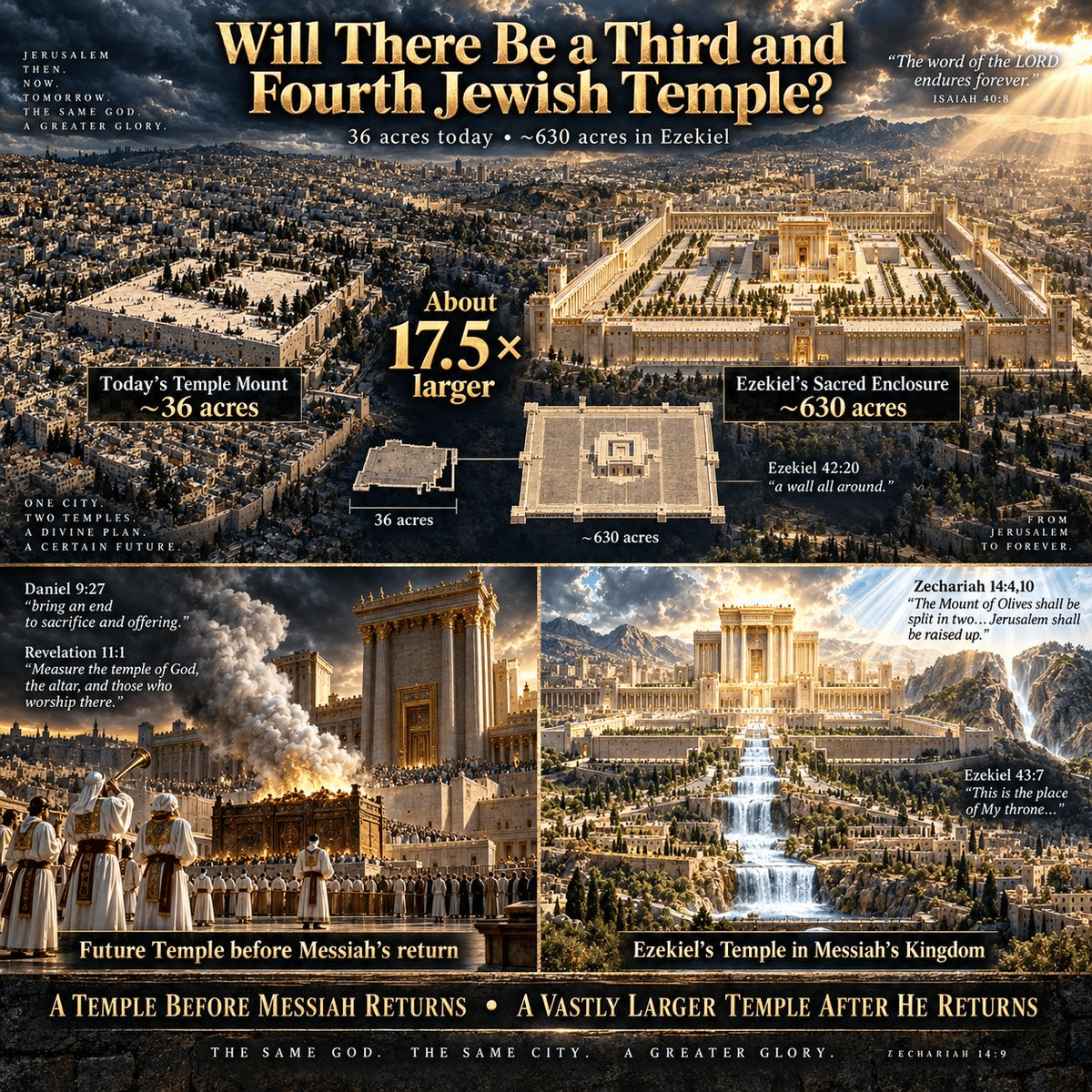
REVELATION 11: A TEMPLE THAT DOESN’T EXIST… YET- Mark Wilson

Posted in Mark Wilson, Prophecy, Temple with tags , , , , , , , , , , , on May 13, 2026 by paulthepoke

At this time, I would like to introduce Mark Wilson to the website! Mark provides outstanding Biblical content on X @ https://x.com/Mark_Wilson_25/

An artistic illustration depicting the future temple as described in Revelation 11, with quotes from biblical texts and a guided timeline highlighting significant events related to the temple.

John is told to measure a temple that does not exist… yet.

“Go and measure the temple of God and the altar, with its worshipers. But exclude the outer court… it has been given to the Gentiles. They will trample on the holy city for 42 months.” (Revelation 11:1–2)

This is not abstract. This is not symbolic drift. This is structure. This is geography. This is time.

And it forces the question:

❖ WHAT TEMPLE IS JOHN SEEING?

It cannot be Solomon’s. It cannot be the Second Temple.

Jesus already declared: “Not one stone here will be left on another; every one will be thrown down.” (Matthew 24:2)

By the time John writes, that destruction is behind him. So if John sees a temple… it must be ahead of us.

~

❖ A REAL, FUNCTIONING TEMPLE IN JERUSALEM

The word used is naos — the inner sanctuary.

Not a vague spiritual idea. A defined sacred space.

There is:

  • a temple
  • an altar
  • worshipers
  • measurable boundaries

This is not how Scripture describes the Church.

~

❖ BUT AREN’T BELIEVERS THE TEMPLE NOW?

Yes. Absolutely.

“Don’t you know that you yourselves are God’s temple and that God’s Spirit dwells in your midst?” (1 Corinthians 3:16)

That is gloriously true. But present spiritual reality does not cancel future prophecy. Believers being called God’s temple does not erase a coming temple any more than being Abraham’s seed erases God’s promises to national Israel.

Revelation 11 describes:

  • an altar
  • outer courts
  • Gentile trampling
  • a defined city
  • a 42-month countdown.

That is not Church-age language. That is prophetic Jerusalem.

~

❖ EVERYTHING HINGES ON THIS TIMELINE

42 months.

Three and a half years.

“So when you see standing in the holy place ‘the abomination that causes desolation’…” (Matthew 24:15)

“In the middle of the ‘seven’ he will put an end to sacrifice and offering.” (Daniel 9:27)

This is the midpoint of the Tribulation. A precise prophetic clock.

~

❖ THE TEMPLE AND THE ANTICHRIST

Paul makes it unavoidable:

“He sets himself up in God’s temple, proclaiming himself to be God.” (2 Thessalonians 2:4)

This is not symbolic language. This is a man… in a place… making a claim. No temple… no fulfillment.

Jesus said you will see it.

Paul said it will happen.

John is told to measure it.

~

❖ JERUSALEM UNDER PRESSURE

“They will trample on the holy city for 42 months.”

Jesus said: “Jerusalem will be trampled on by the Gentiles until the times of the Gentiles are fulfilled.” (Luke 21:24)

A Jewish city. A contested mount. A ticking clock.

This is not ancient history.

This is the season.

~

❖ AND THE SEASON IS GETTING LOUDER

For centuries, Jews were forbidden from praying openly on the Temple Mount.

Now? That barrier is beginning to crack.

Reports in recent years have documented increased Jewish prayer access and quiet permissions on the Temple Mount.

Small? Yes. Symbolic? Maybe. But prophetically… significant.

Because Revelation 11 requires one thing: A Jewish place of worship… functioning again.

~

❖ THE PREPARATION IS ALREADY UNDERWAY

The Temple Institute has already:

  • Recreated priestly garments
  • Prepared temple vessels
  • Trained priests from the line of Levi
  • Constructed a functional altar
  • Advanced efforts for red heifer purification

This is not speculation. This is infrastructure.

~

❖ GOD’S PROPHETIC CLOCK IS MOVING

Chuck Missler “Israel is the hour hand. Jerusalem is the minute hand. The Temple Mount is the second hand.”

Watch the second hand… and everything accelerates.

~

❖ THE TEXT REFUSES TO BE REDUCED

This is not the Church. The Church is not divided into courts. Not trampled geographically. Not measured with an altar tied to sacrifice.

And the Antichrist does not sit in a metaphor.

~

❖ THE PROPHETIC FLOW IS CONSISTENT

  • Israel regathered.
  • Jerusalem restored to global focus.
  • A covenant emerges.
  • Temple worship resumes.
  • The temple is measured.
  • The Antichrist desecrates it.
  • Judgment intensifies.

This is not random. It is coordinated.

~

❖ SO WHAT ARE WE WATCHING?

Not imagination. Not allegory.

A future, literal temple in Jerusalem… casting its shadow into the present.

  • And if Revelation 11 is literal…
  • If Jesus meant what He said…
  • If Paul described a real event…
  • Then we are not waiting for prophecy to be written.

We are watching the conditions align.

The season is not silent.

It is accelerating.